Botanical Renaissance
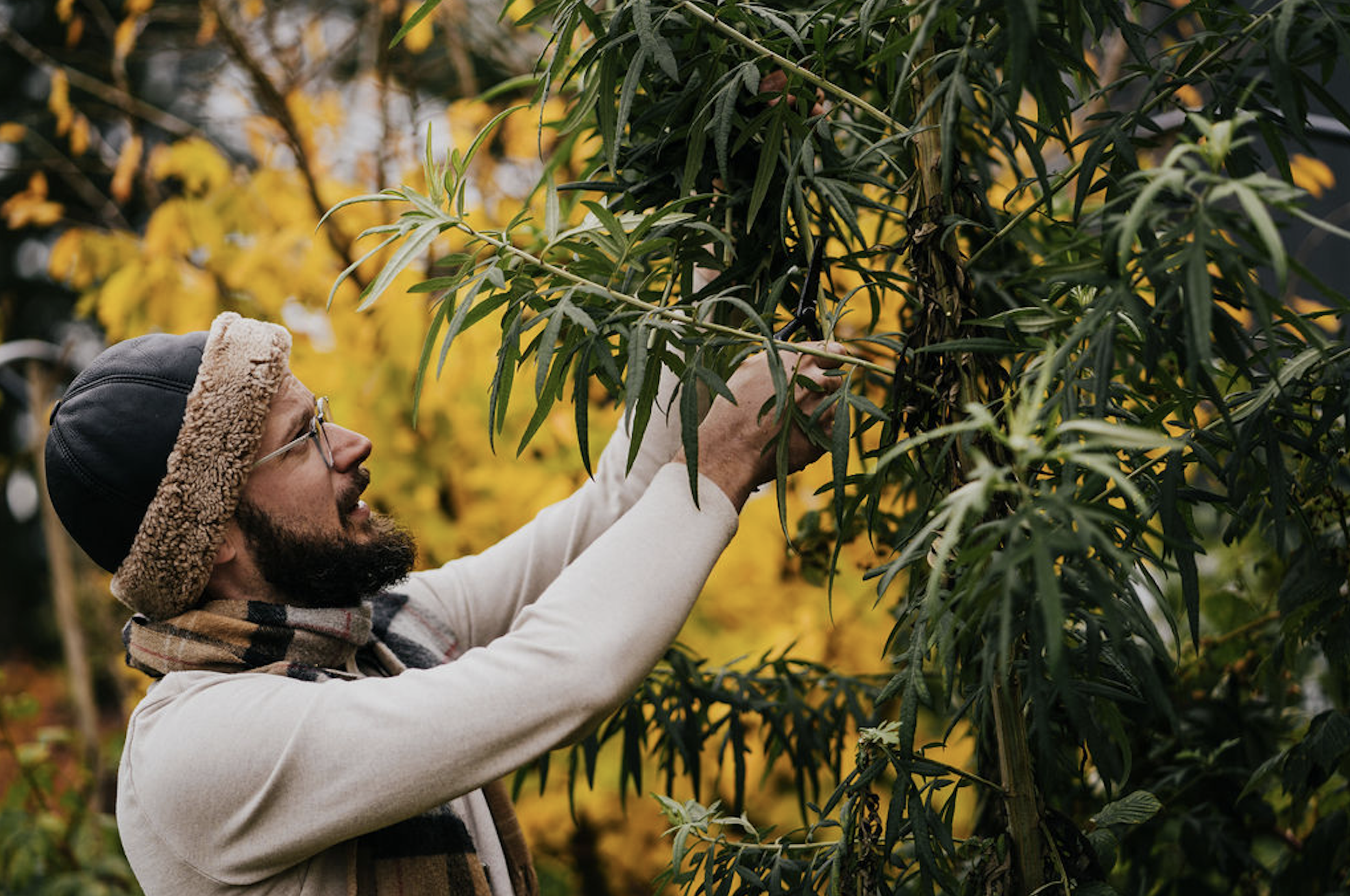
On a windy rise in Musk, Jesse Leith says the new Enki farm is rapidly coming to life. “We’ve been heads-down in that project,” he tells me. “But it’s coming along, man, and it’s going to be quite a stunning thing.”
For Leith, the farm was never a side project, it was the gravitational centre. “We’ve had it for three, three and a half years,” he says. “It’s been producing the herbs for the company, and the lab got moved there two years ago. All the extraction happens on site now.” The quiet escalation; new lab, new equipment, expanded acreage, has crept up on him. “Manufacturing has been scaled up quite a bit,” he adds. “We’ve got over fifty botanical species we’re using for the company.”
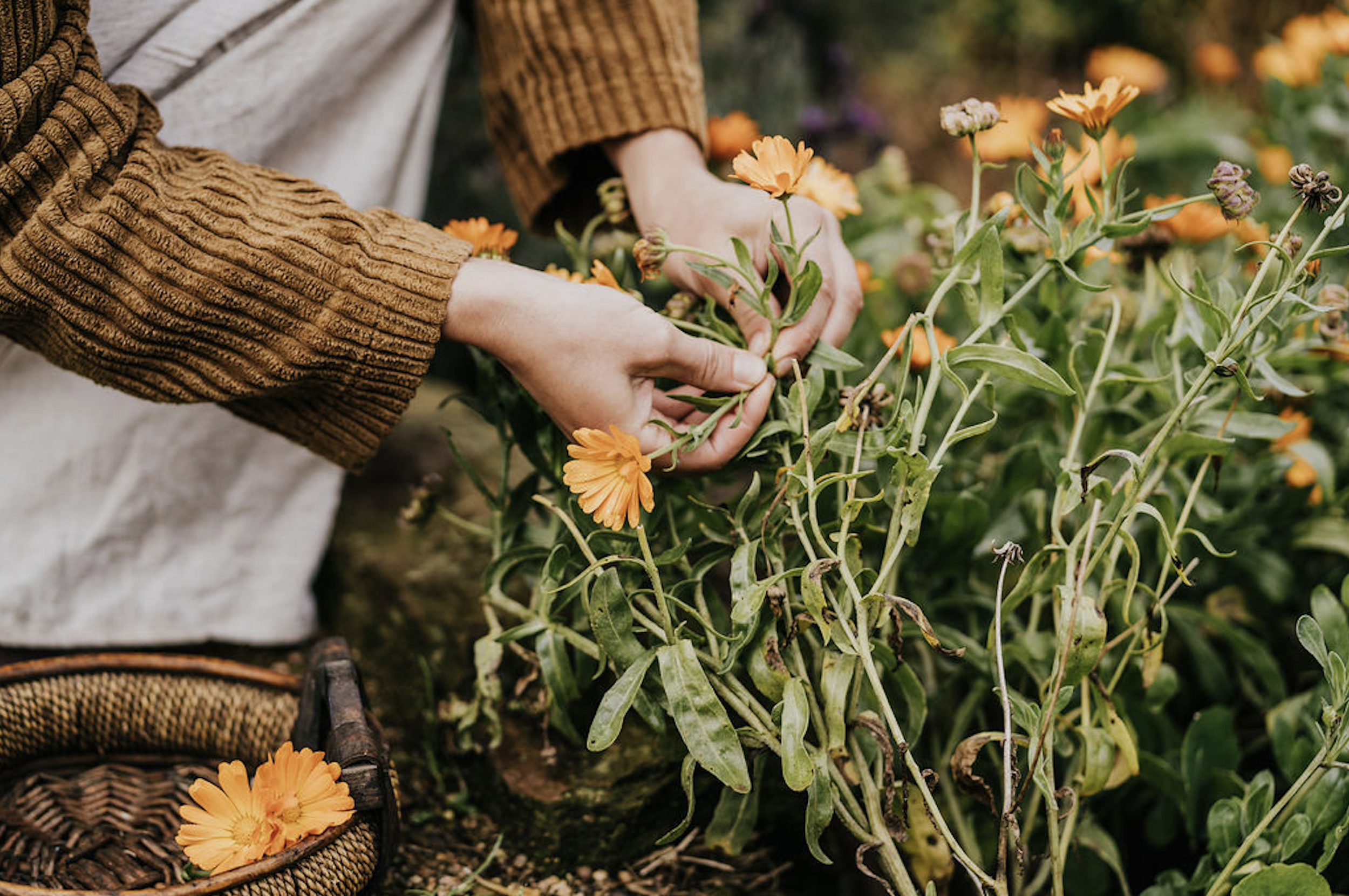
When I ask which plants anchor Enki’s apothecary, he doesn’t hesitate. “Ashwagandha is a key one. Very hard to grow in Australia, and very hard to get good quality worldwide. To grow that biodynamically is big.” Then the mushrooms: “Native Australian reishi, native Australian lion’s mane.” And the old-world herbs that read like notes from a medieval pharmacopeia: “Yarrow, calendula… baronia, which is a native we grow for skincare. Ashwagandha and shatavari are big ones. And Siberian ginseng…people love hearing we’re growing ginseng.”
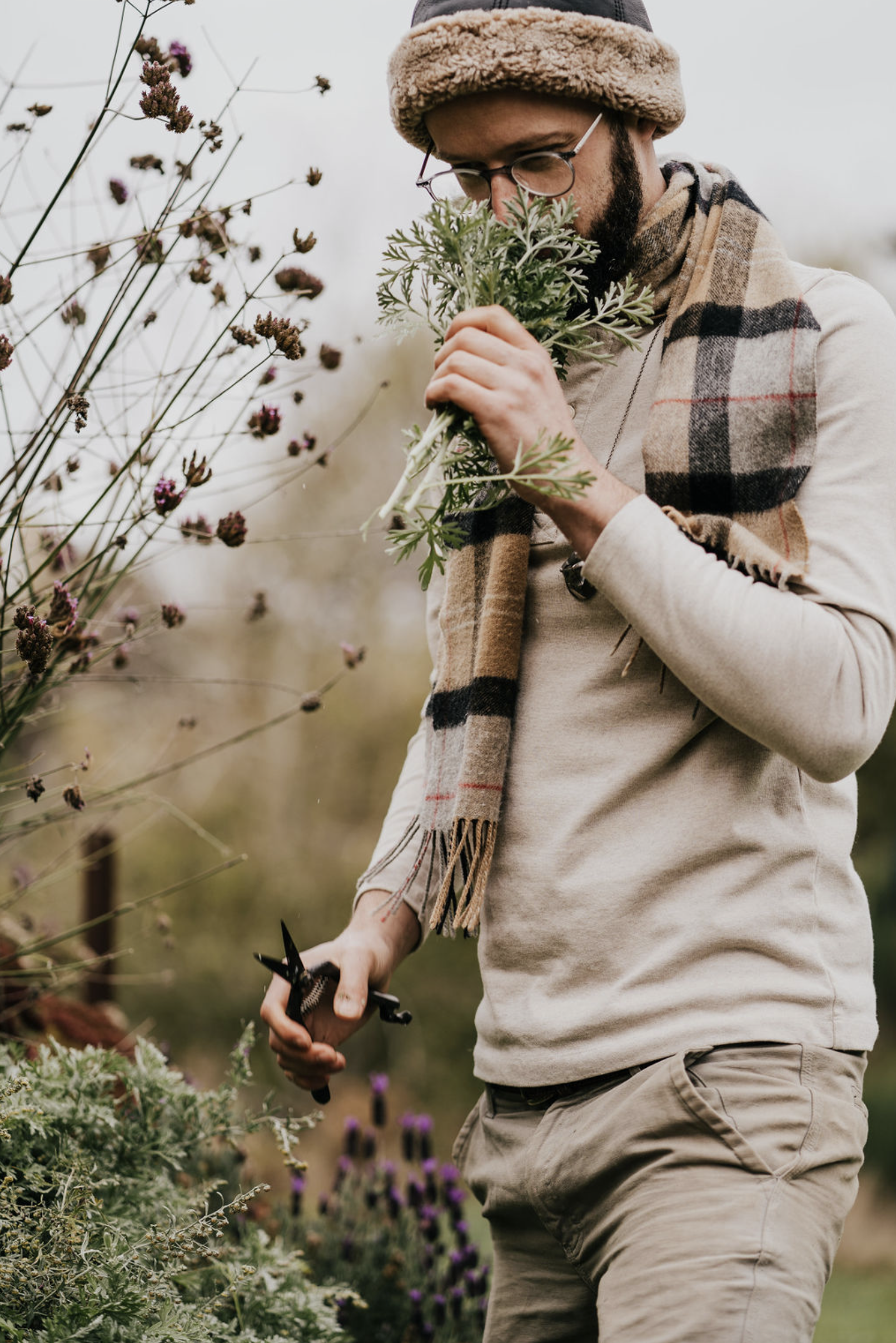
He describes the plant’s journey with a craftsman’s patience. Ashwagandha, he says, “is very hard to grow as a perennial in temperate climates, but with our biodynamic techniques we manage to get it there.” Most of their herbs are grown from seed. “It means they’re adapted to the area. They grow two to three years before harvest. We hand-harvest everything. It’s a root, so we dig the roots, cure them, and then they go into the extraction process to be made into a high-potency botanical extract; supplements, skincare, aromatics, depending on the plant.”
The project circles around an ethos Leith is certain will define the next decade: nutrient density. “Organic really means nothing,” he says. “In the 1920s an orange was always organic, and the nutrient density of that orange was eight times that of an organic orange today.” What matters now, he insists, is soil. “Nutrient density is going to be a significant store of value in the future. That’s what I would want to invest my money in… and that’s why I do.”
Enki’s agricultural philosophy rests on three pillars: permaculture, syntropic agroforestry, and biodynamics. “Syntropic agroforestry is the commercially viable form we’ve gone for,” Leith explains. “Trees and perennials grown close together, lots of chop-and-drop to rehabilitate the soil.
We put in three times the garden waste we take out.” The biodynamics are informed by Enki’s spagyric practice. “We can manufacture our own biodynamic applications,” he says. “Above-and-beyond quality preparations. They do a lot more for the soil.”
The farm will open to the public in January. “By appointment only,” he says. Not a café, not a cellar door in the wine-country sense. “It’ll be low-key, low-volume. A tea house, an herbal apothecary. A curated retail experience.”
He envisions “garden tours, a tea house, workshops, distillation workshops, herbal gardening workshops. Very experiential.” The intention, he says, is educational. “Enki’s experience spaces aim to connect people with food as medicine and herbs as the forgotten food that is our medicine.” The teas and infusions will allow for a slower communion. “By sitting down and engaging with the plants, it gives a connection to nature. That’s our botanical renaissance. We want people to be connected to plants and nature. We think it’s important. We love it. And it’s changed our lives.”
Before we finish, he adds one more thing: “There’ll be skincare and perfume experiences too.” He says it almost casually, though it feels like another door opening.
He smiles. “It’s going to be fun.”
ENKI APOTHECARY
STORY BY MAHMOOD FAZAL
PHOTOS BY CHRIS TURNER
Enki Apothecary
enki.au