Layers of Memory
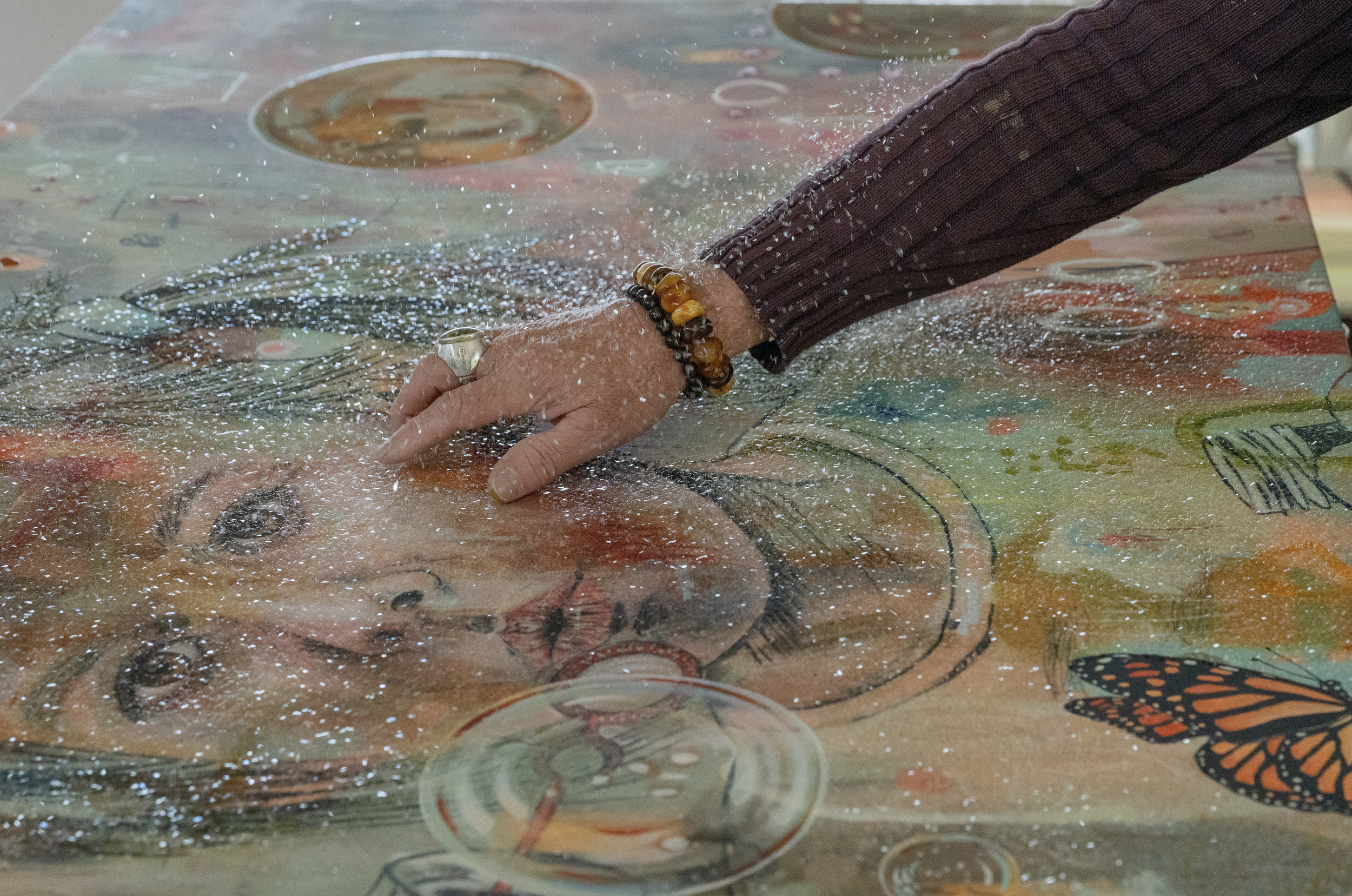
Michael Parker is not the kind of artist whose work arrives fully formed at the easel. He doesn’t approach a blank panel with a fixed design in mind. “I make marks, scrape things back, tear paper, glue bits down, and let the surface take shape,” he tells me, describing his process as a dive into the unknown, a plunge that trusts accidents to become “the most interesting parts of the work.”
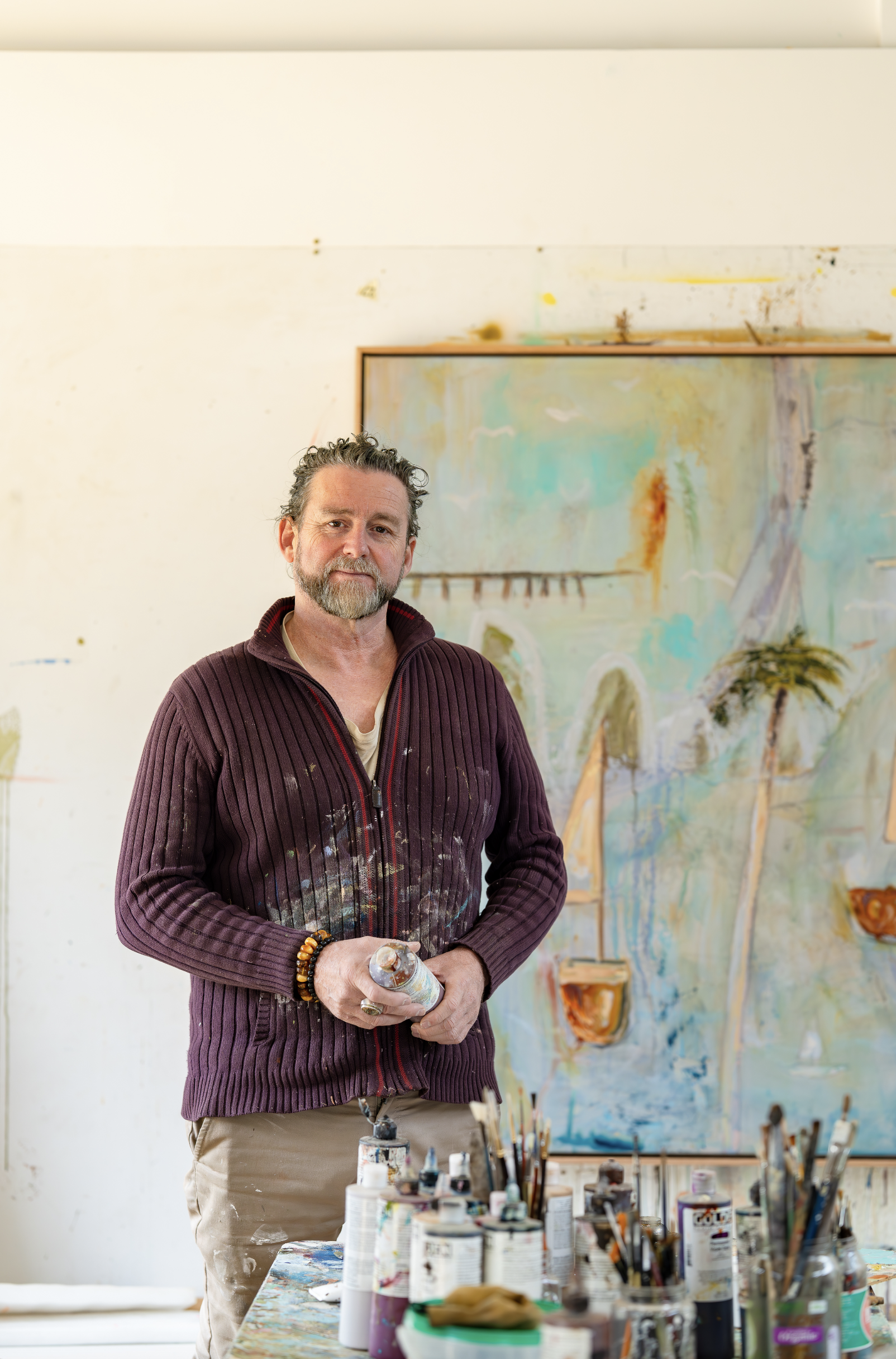
What unfolds is not a preordained image but a living surface: textured, scarred, haunted by its own making. Layers of wax, paint, wood, old paper, vintage postcards, rusty metal - fragments with previous lives - accumulate until something emerges. In Parker’s hands, these materials don’t just sit side by side; they converse. The result is a work that carries history in its scars and quiet beauty in its imperfection.
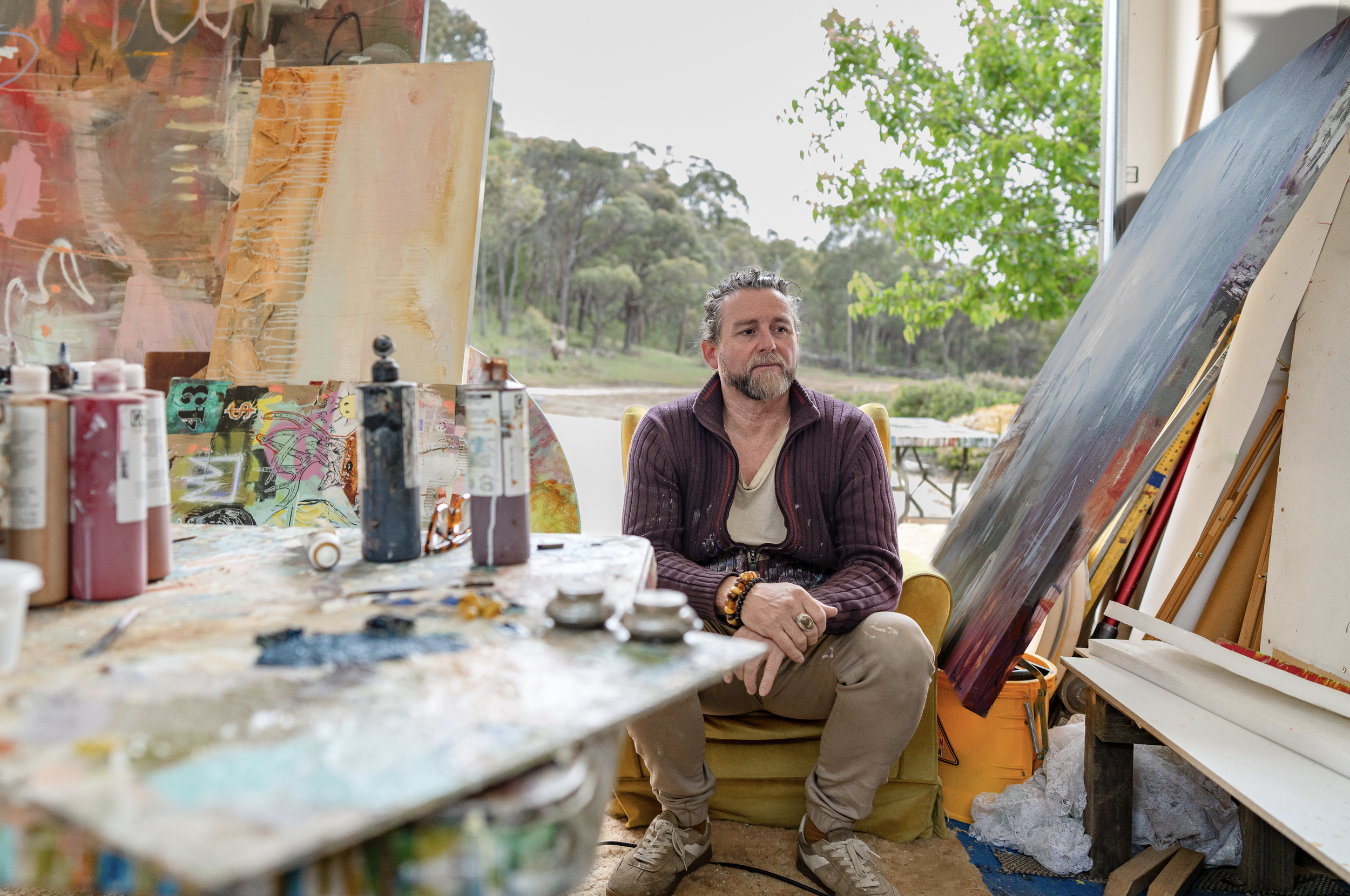
Parker lives and works in the bushland between Daylesford and Fryerstown, Victoria. In that space, time seems to slow. The wide skies, shifting light, and the gentle footsteps of kangaroos, deer, ducks, and rabbits outside his studio windows create a rhythm very different from city urgency. “Living out here gives me a huge sense of space both mentally and physically,” he says. That quiet, that sense of breathing room, shapes not only when he works but how he thinks: ideas get to settle, gestate, evolve. The stillness becomes part of the painting. And that quiet rural setting is more than backdrop: it’s a collaborator.
It wasn’t always like this. Parker’s early years were steeped in a more traditional artistic ambition. Growing up surrounded by his mother’s botanical paintings, he learned early that a blank canvas could feel like pure possibility “like magic,” he remembers. As a child he tried selling small works, then in his twenties travelled, taught himself to capture light and likeness, and exhibited small paintings at markets. After working in human services and screen printing, his guts finally told him it was time to leap. He quit everything, spent a year painting full-time, and the next thing he knew he had founded his own space, a property that became Stony Creek Gallery. Soon after came Michael Parker Gallery in town. These galleries are not mere shops but extensions of his studio life, where the work can breathe, be seen, and find resonance.
Over time, Parker began to shift: realism and the careful craft of trompe l’oeil gave way to intuitive, imperfect, layered abstraction and mixed-media works. “There was not one defining moment. It was more gradual. I would try something, mess it up, and realise the mistake had more honesty and energy than the thing I had originally planned.” Those “happy accidents” offered vitality that precision couldn’t. His surfaces, built up and scraped back, reworked and re-coloured, embraced instability.
The controlled pastels of realism were replaced by the grit of reclaimed materials, the warmth of wax, the whispers of words embedded in paint.
Words, affirmations, fragments of lyrics, poems, passing thoughts, often surface quietly in his paintings, as if they were always there in the grain of the canvas. Parker says he believes in the energy of language. “Thoughts become things,” he explains; words slip onto the canvas when it feels right. Sometimes a piece needs none, sometimes a single word is enough to shift its energy entirely. There is no formula. It is an instinctual act, like a heartbeat, quiet but persistent.

He rarely considers the viewer while he paints. First and foremost, the work must excite and sustain him; only later, once the canvas leaves the studio, might it find someone to resonate with. “Some pieces connect with people straight away and others take longer or speak to different people for different reasons. That connection is always a surprise and a lovely one. People bring their own stories to the paintings.” For Parker, art is not about selling a polished object but offering something alive, something open to interpretation and memory.
Today, after decades of making, selling, teaching himself, and building galleries, Parker still senses momentum in the unknown. He speaks of the pull of new places, India, full of colour and pulse, texture and movement, and imagines letting fresh landscapes shape his work anew. The future, like the beginning of any piece, feels like a blank panel: full of risk, possibility, and the promise that if he dives in, the accidents might lead him somewhere profound.
In the work of Michael Parker there is no final polish, no slick perfection, no detachment. There is the scent of wax and old paper, the grain of wood and the whisper of ink, the tilt of the canvas under shifting light, the memory of seasons in bush and sky.
And beyond the studio, in the galleries he built, there is the possibility that someone might see a scar, a layer, a word, and find in it a fragment of their own story.
Michael Parker
Michael Parker Gallery 52 Vincent St, Daylesford and
Stony Creek Gallery 10 Stony Creek Rd, Daylesford michaelparkergallery.com.au
MICHAEL PARKER
STORY BY MAHMOOD FAZAL
PHOTOS BY AMBER GARDENER