
Imperfection as Intention
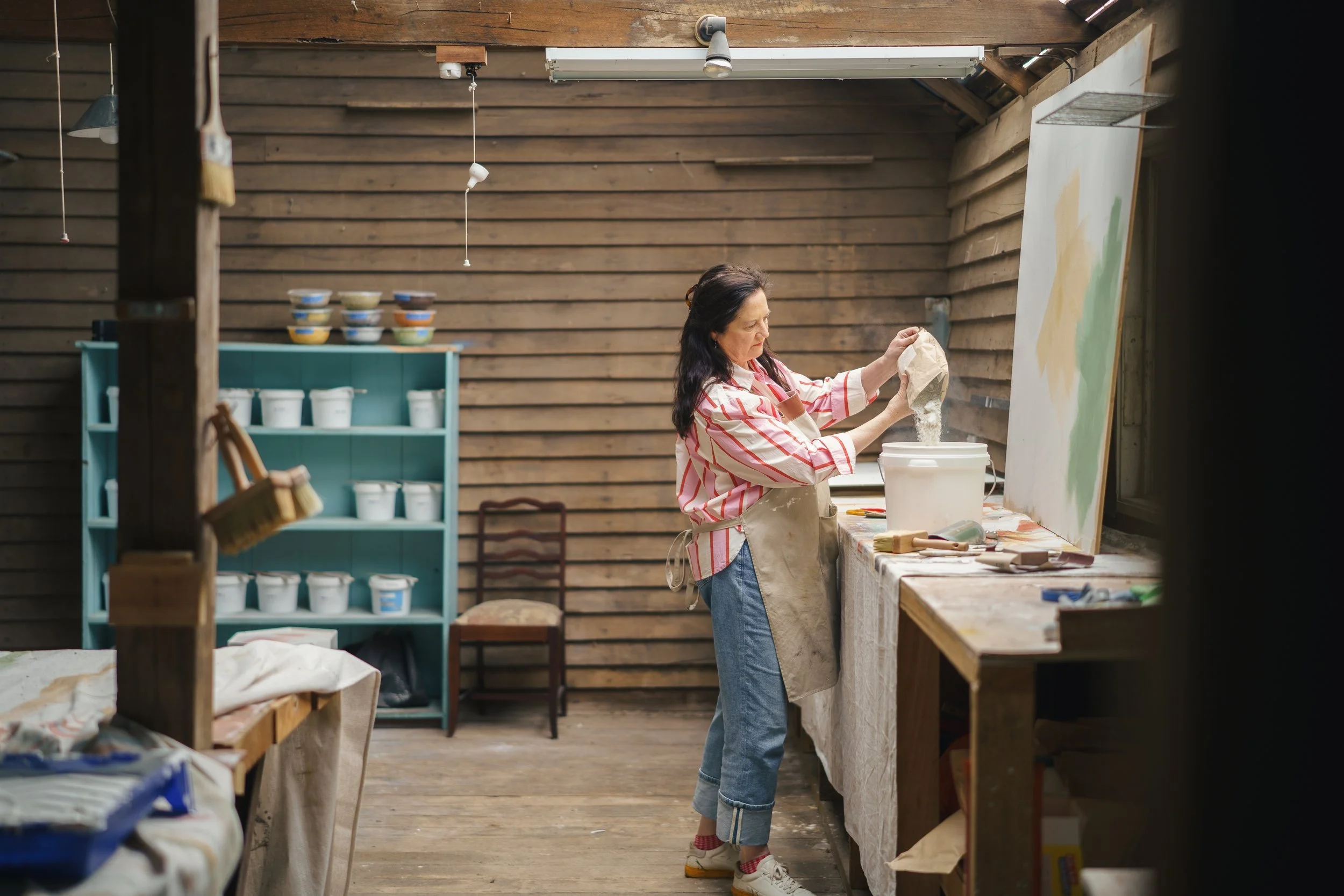
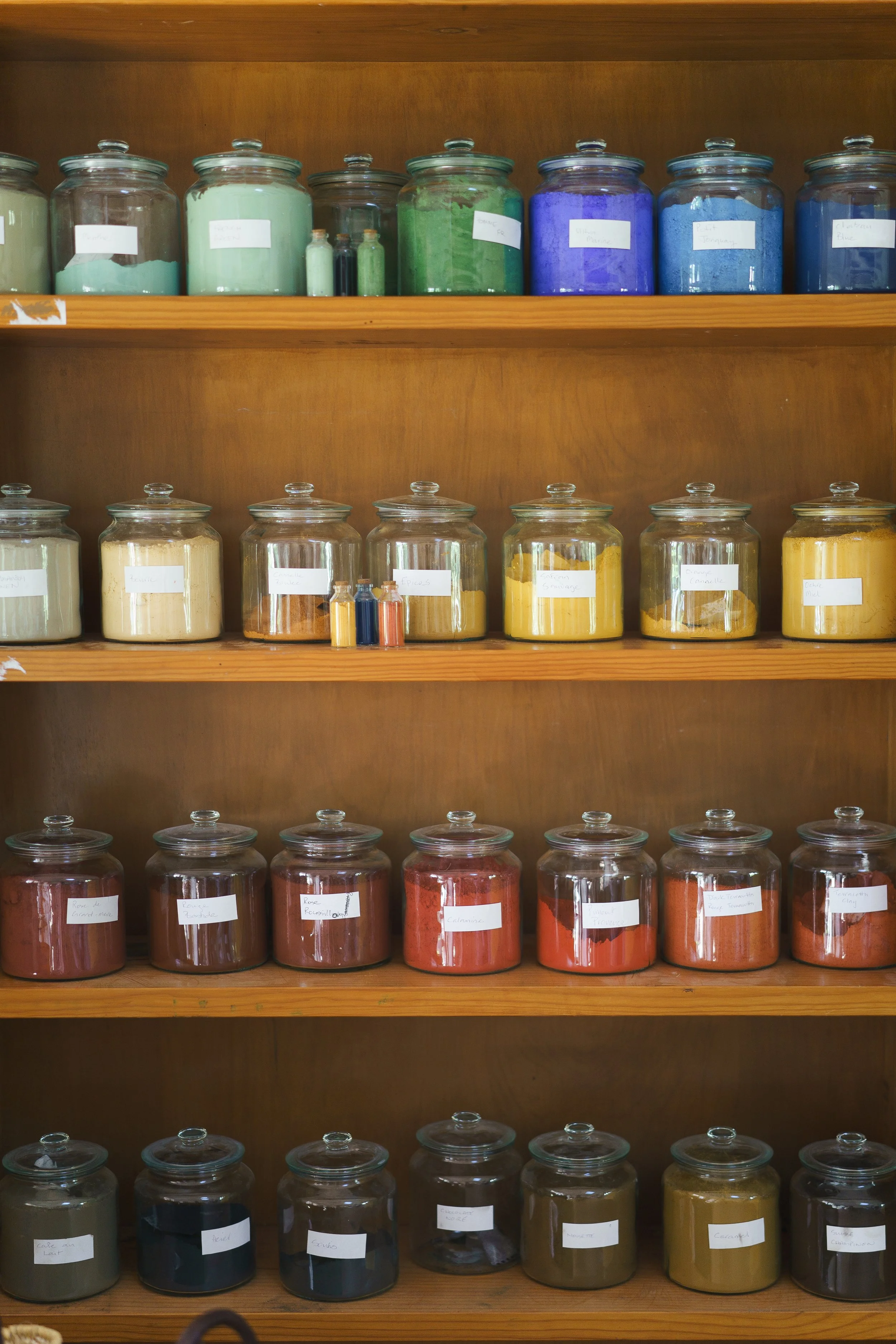
At first glance, Lime au Lait Atelier appears to belong to the current wave of design brands preoccupied with the slow movement: powdered limewash packaged in compostable paper bags, pigments sourced from France, a palette of muted creams and mineral greens. But the company’s founder, Jane Hiscock, speaks about paint less as a product than as a way of seeing. “It has extraordinary depth,” she told me recently. “It moves with the light, in a way no plastic, modern paint does. It’s the layering, something that gets better with time.”
The origins of the company are folded into an older European story.
According to the brand’s website, Hiscock spent more than two decades working across Australia, England, and France in interior finishes and restoration, including the renovation of the four-hundred-year-old Château du Jonquay in Normandy.
The château seems to have altered not only her eye but her tolerance for excess. “Being immersed in such a lengthy process of scraping back layers of plaster that someone applied several hundred years ago teaches you restraint and an appreciation of less is sometimes more,” she said. “The château taught me that a room doesn’t need to perform, it just needs presence. Proportion, depth and light. Everything else is noise.”
There is, in the way she talks about interiors, a resistance to contemporary polish. She returns often to the dignity of wear. “Imperfection as intention,” she said, describing what old European interiors understand instinctively. “A scuff on a limewash wall isn’t a flaw, it’s evidence of life.” Modern interiors, by contrast, have become “terrified of marks and scrapes,” sealed over in what she calls “plastic chemical paints.”
Even her favourite colours resist immediacy. One of them, Normandy Linen, sounds almost invisible at first. “In a swatch, it appears as almost nothing,” she said. “Then on the wall in morning or afternoon sun it becomes something extraordinary.” She has used it everywhere: cottages, terrace houses in Collingwood, homes on the Mornington Peninsula. The other favourite, Pomme Green, is its opposite: “a bright, vibrant, apple green that livens up every space whether large or small.”
Limewash itself has recently become fashionable again, though Hiscock is wary of the theatricality that sometimes accompanies its return. “I see a lot of very aggressive lime wash application at the moment,” she said. “Deeply furrowed, almost theatrical. It can work in a very specific context but it often reads as effort rather than ease.” Real texture, she insists, “comes from the natural mineral content, from the layering and knowing when to stop.”
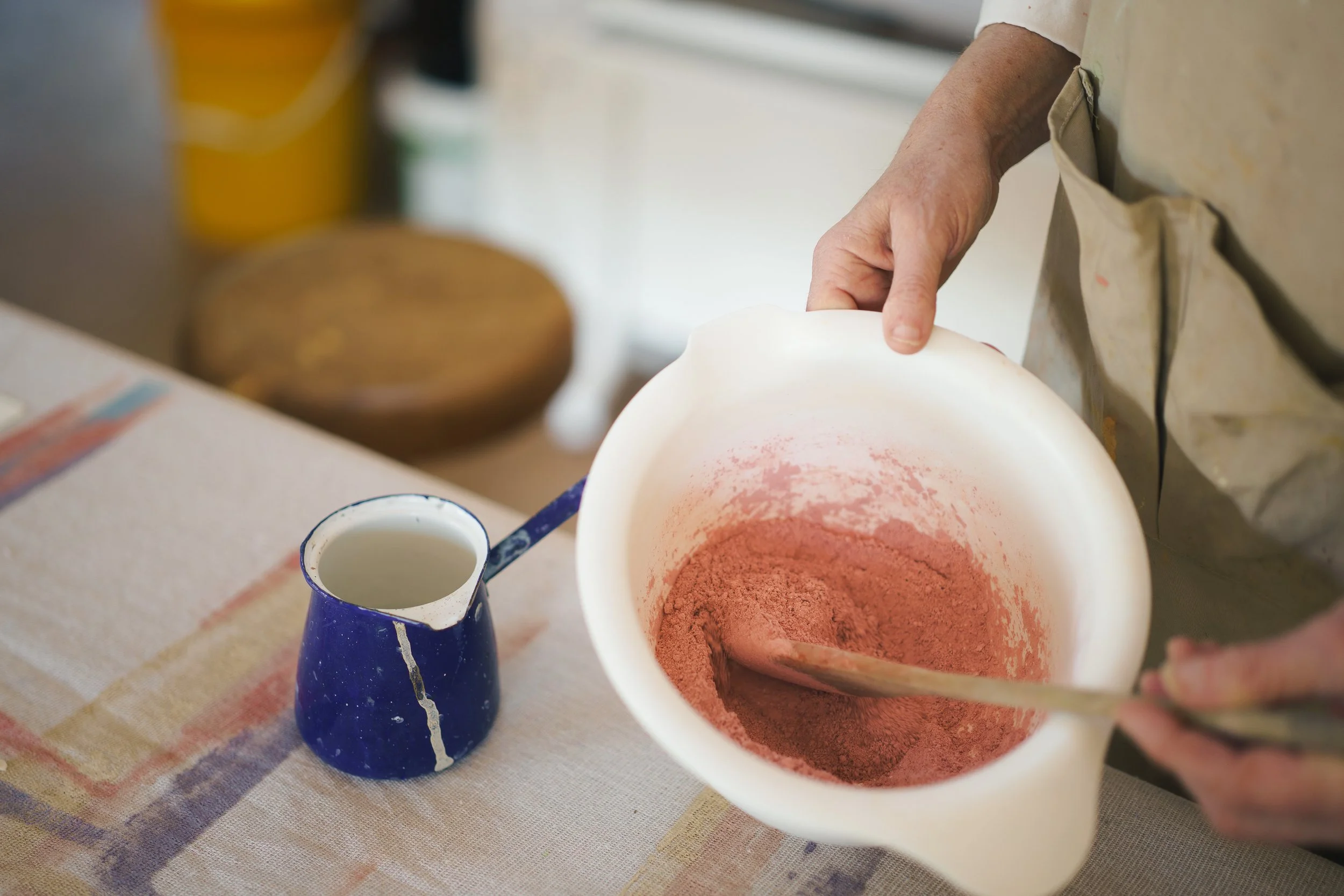
Australia has gradually entered the palette too, despite Lime au Lait’s Norman beginnings. Hiscock speaks almost romantically about light: the softness of northern France against the intensity of Australian summer. The company’s forthcoming spring collection, she said, draws inspiration from the gardens at New Park Farm in Tylden, Victoria.
“The strength of colour against our strong Australian blue sky is a huge source of inspiration,” she explained. “We have specific shades which only exist because of what happens to them in the early evening light of Australian summer.”
What Hiscock seems most interested in preserving is not style but atmosphere. “When the limewash is doing its job you just feel comfort,” she said. “A warmth and depth but you can’t really say why. The room feels like it has always been.”
That distinction, between rooms that are lived in and rooms staged for images, appears central to her philosophy. “A timeless interior is made for its specific place and the people who inhabit it,” she said. “Not for a photograph. Trends exist to be photographed. Timeless interiors exist to be lived in and loved.”
For now, Lime au Lait is expanding into furniture and fabric paints, with an emphasis on restoration and reuse rather than replacement. Hiscock spoke fondly of “your grandmother’s old furniture,” pieces deserving of another life. But even as the company grows, her imagination returns to the same surface. “I never tire of an old limewashed wall,” she said. “It carries evidence of human rhythm.”
Lime Au Lait Atelier
Jane Hiscock
STORY BY CONTRIBUTING WRITER
PHOTOS BY KAIYA RAE