
The Poetry of Impermanence
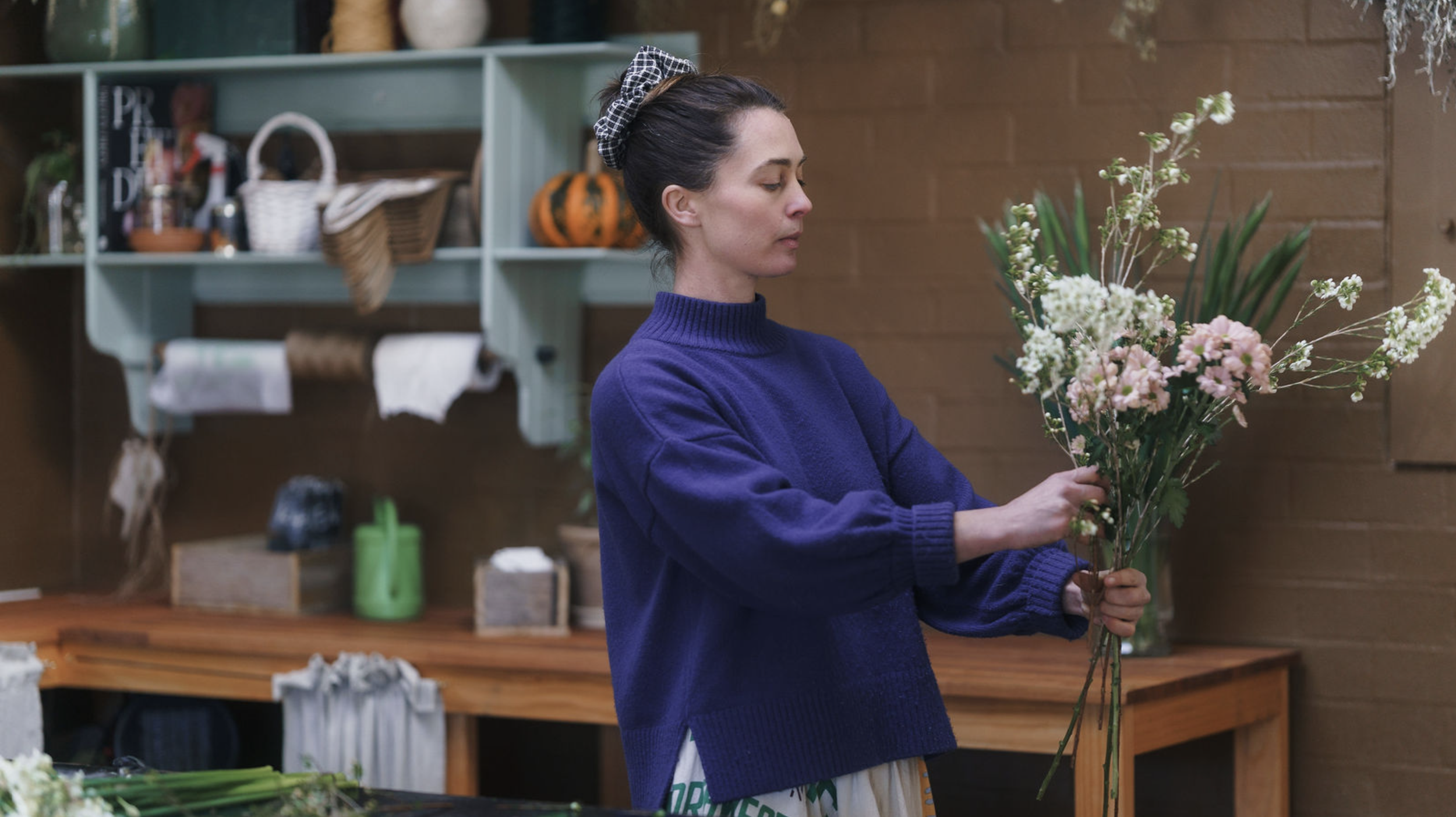
There is something slightly perverse about the modern flower industry. We take something whose beauty comes partly from the fact that it is alive, seasonal and destined to die, then spend enormous amounts of energy trying to make it available everywhere, all the time.
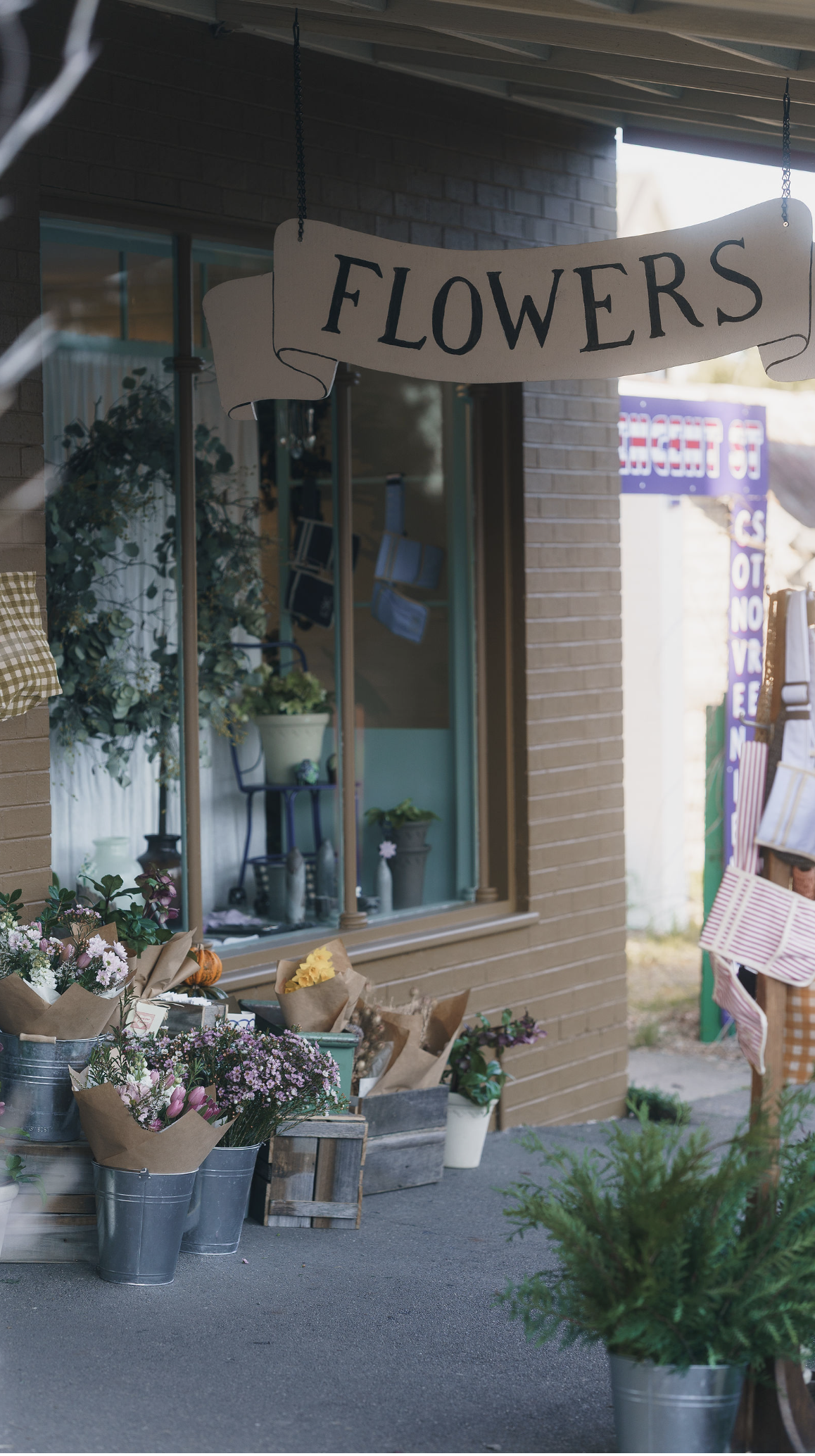
At Larkspur Flowers, on Vincent Street in Daylesford, Elissa is trying something different. The shop works exclusively with Australian-grown flowers, following the seasons rather than attempting to defeat them. There is no floral foam, no plastic wrapping, no synthetic ribbon. Sometimes, there are no red roses on Valentine’s Day.
Elissa Dannock came to floristry indirectly. She studied landscape design at Swinburne, where a favourite subject was permaculture.
She was drawn to the idea of designing gardens that worked with the lives unfolding inside them: “Designing with intention, while also accepting and working with the way life naturally moves and grows.”
Flowers eventually became another way of doing the same thing.
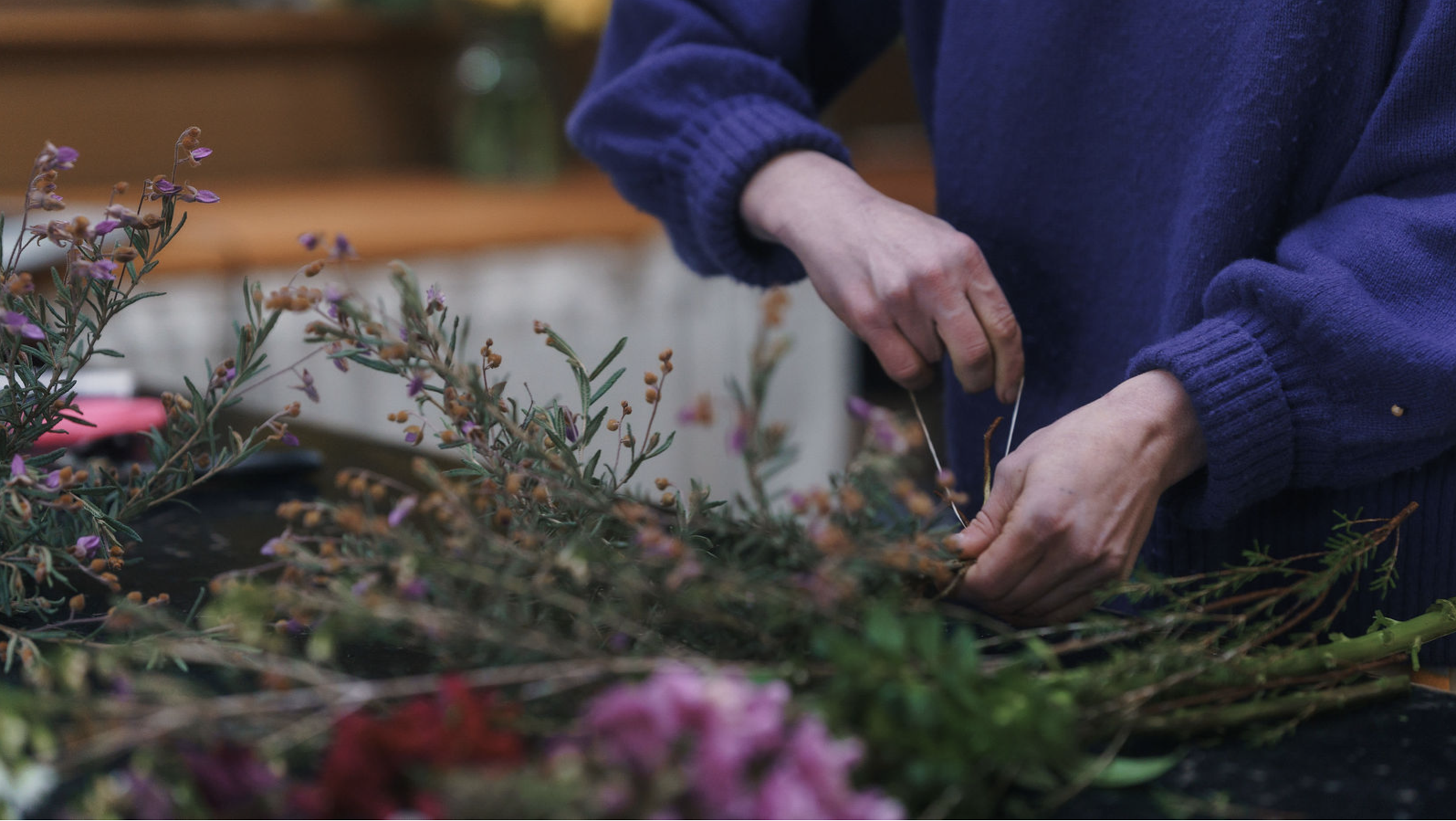
“I don’t mind working with unusual shapes, wonky stems or imperfections,” she says. “I actually really like those things. It’s about working with nature rather than against it.” When she arranges flowers, she thinks about depth, texture, movement and scent, creating what she calls “little rooms” inside an arrangement. “Flowers are just my medium and I use them to tell a story and to create connection to place and the seasons.”
Floristry first appeared to her as a possible life at the Melbourne International Flower and Garden Show in 2015. What she remembers now is less a particular arrangement than a feeling: “I think ultimately what I saw was something I could belong to.”
She had travelled, studied and moved through different jobs. Photography interested her for a while. So did beekeeping. Floristry might easily have been another passing fascination. Instead, she completed her training and found herself installing flowers for large corporate events in Melbourne, discovering that the work was “a lot less glamorous and a lot more demanding” than she had imagined. What kept her there wasn’t simply beauty. She wanted “to have a place within a community, to be skilled at something that is useful to people, to work with my hands, to be creative and to care for the planet.”
After moving to Daylesford, she worked at a small regenerative flower farm in Lyonville. There she learnt the less photogenic life of a flower: watering, weeding, seedlings, beneficial insects, propagation, pruning and knowing precisely when something should be cut. “I understand the time, patience and hard work behind what I’m holding.”
That understanding became central to Larkspur. Today the shop at 109a Vincent Street sells seasonal arrangements and works across weddings, events and installations.
But perhaps its most interesting product is restraint.
If somebody wants calla lilies in summer, Elissa will tell them they cannot have them. Australian growers produce them from midwinter into early spring. Instead, she might suggest belladonnas. “Rather than seeing seasonality as a limitation, I see it as part of the creative process,” she says. “Every arrangement has a connection to the time and place it was made.”
Last Valentine’s Day, Larkspur didn’t sell a single red rose. Nobody complained. Elissa had wondered whether customers would miss the synthetic ribbons when she stopped using those, too. They didn’t. “People can only question an expectation once you’ve challenged it.”
Perhaps that is what Larkspur is really selling: permission to appreciate something without needing to possess it for very long.
Elissa sometimes takes a small bunch of daffodils home and puts them in the same spot, simply for the pleasure of walking past them. Flowers accompany weddings and funerals, apologies and declarations of love, but they also mark less consequential moments — a room, a season, an ordinary Tuesday. “There will always be a need for flowers,” she says, “because there will always be a need to connect with nature and each other.”
And, eventually, they die.
Elissa thinks this is not a defect but the point.
“There are so many beautiful things that are worth experiencing for a moment,” she says. “A good bottle of wine, live music, a beautiful meal, a sunset.”
“They’re fleeting. They don’t last, but they can feed your soul in a way that something permanent sometimes can’t.”
Flowers, she thinks, can do the same.
Larkspur Flowers
109 Vincent Street, Daylesford
larkspurflowers.com.au
STORY BY MAHMOOD FAZAL
PHOTOS BY KAIYA RAE