
The Joy and The Energy
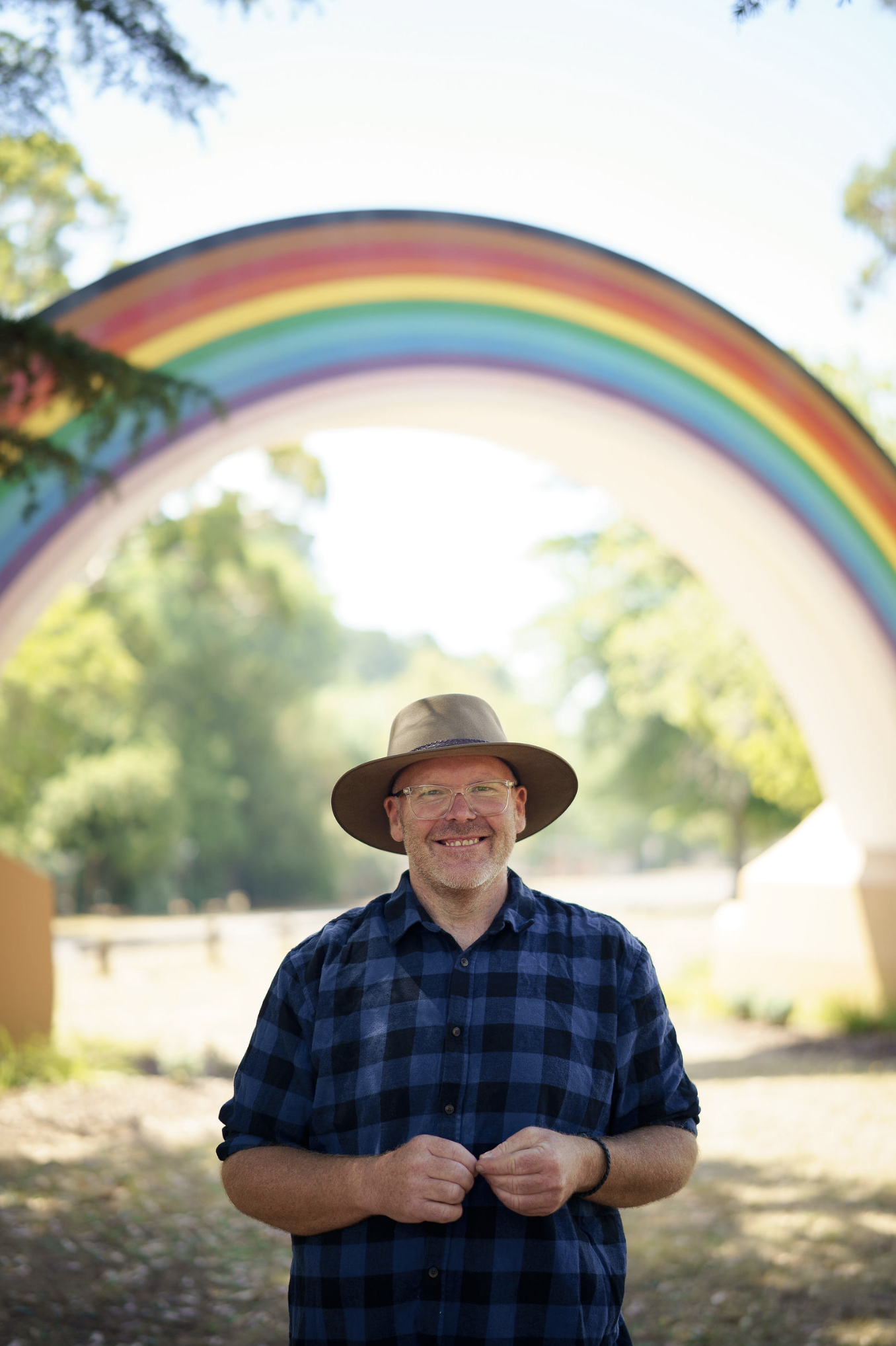
Matt Clarke grew up in a town of about a thousand people, the youngest of six, a surprise arrival nine years after the rest. “My mum and dad had five children in eight years,” he says, “and then nine years later, I came along.” By then, his siblings were already edging toward adulthood. “They were finishing school, heading off into the big, wide world. I was only just ending primary school.”
Wycheproof, “up towards the central part of Victoria,” was small, quiet, and largely untouched by technology in the late eighties and early nineties. “There was barely any technology,” he remembers. “We rode bikes, we swam, every day after school we were at the pool doing bombs off the diving boards.” Winters were for squash and golf, summers for tennis. “We just made the town work.”
It was, by his account, a good childhood. “I had really good friends, a really good schooling and education.” And unlike many queer stories that follow a script of early fracture, his did not. “I didn’t have a really difficult life growing up as a gay kid,” Matt says. “I never disclosed my sexuality, not through fear, not through not being accepted. I just didn’t need to.” He pauses. “I always knew I was gay.” There were small, ordinary recognitions, “putting my mum’s high heels on and clunking around the house,” and later, certainty. “From the age of twelve or thirteen, I was attracted to other males.”
What stands out is not concealment but ease. “There was no moment in my youth where I had a really challenging life because of my sexuality.” Years later, he would reconnect with men from that same generation. “We all came out later on in life,” he says, laughing. “And we all agreed we had a great childhood.”
His devotion to horses arrived mysteriously. “I don’t know where it came from,” he says. There were no horses at home, no obvious lineage. Just a pull. “I wanted to read about them, touch them, learn about them.” After Year 12, the limitations of small-town life made themselves clear. “If you didn’t grow up on a farm, you had to leave town to better your life.” He moved to Melbourne, briefly attempted cooking school. “It just didn’t sit well. I forced myself into it.”
Harness racing, however, felt immediate and exact. “I enrolled, got accepted, and away I went.” Bendigo. A share house. Total immersion. “I absolutely threw myself into it.” He graduated top of his cohort. “I won an all expenses paid trip to New Zealand.” Soon after, he joined the Manning stable in Great Western. “That was a really significant moment in my life,” he says. “They were world-class trainers.”
For more than a decade, it was not employment but rhythm. “It was never a job. It was life.” Mornings with horses. Nights at the track. “That work ethic has really stayed with me.”
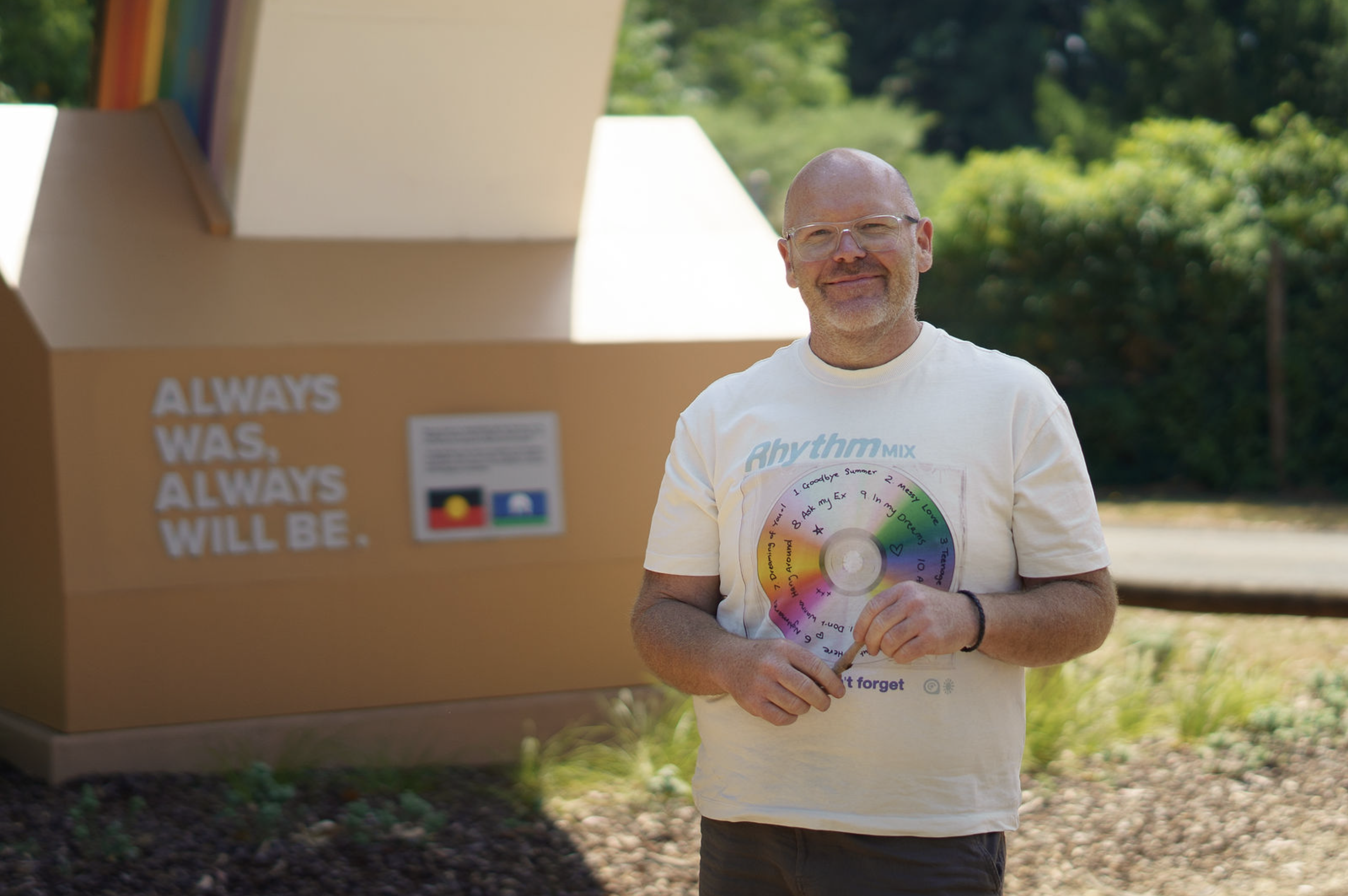
It was later, “in my late twenties,” that difficulty arrived. Not as spectacle, but as pressure. “I was feeling isolated and stuck,” he says. “You fall in love, you have relationships, but you keep everything secretive.” He resisted the idea that his life should be defined by disclosure. “I didn’t want my personality defined by who I slept with.” But, as he puts it plainly, “society makes it really difficult for you not to come out.
What followed was a reckoning. He speaks about it not to centre pain, but to insist on honesty. “I really wanted to talk about this,” he says. “People know who I am in my workplace, but they don’t know my story.” What matters, he insists, is the outcome. “I asked for help.” He found professional support. “I established a really remarkable relationship with a psychologist in Ballarat,” he says simply. “That saved my life.”
The urgency to speak now comes from watching the present. “We see so much in the media about homophobia,” he says. “About the pressure people are under to become themselves.” His frustration is precise. “People say stop shoving it down our throats.” He pauses. “But society is already talking about us behind closed doors.” The contradiction is exhausting. “You don’t have a choice.”
This is where ChillOut Festival enters his life not as spectacle, but as shelter. “It’s the most beautiful little queer festival we have in Australia,” he says. He joined the committee quietly. “I didn’t know anyone. I just walked in.” Within a year, he was chair.
He brought instinct and structure. “We needed to think about ChillOut as a business and a brand.” The name was trademarked. “If people want to use it, they need to contribute.” What we know as “basic economics” became sustainability. “We own the story now.”
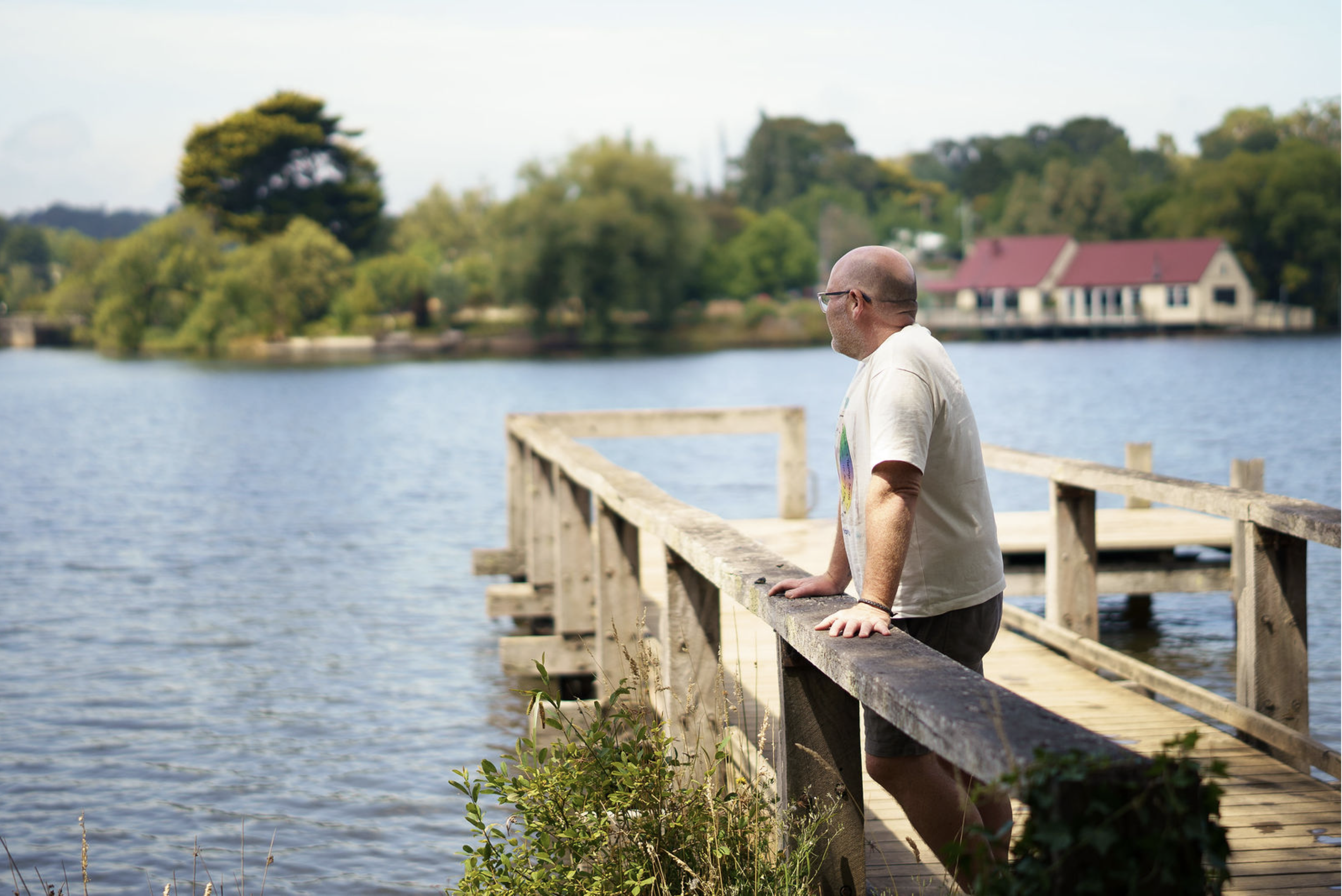
But the heart of the festival remains people, especially young ones. “We’re trying to create free, welcoming spaces for youth,” he explains. Spaces where they can arrive without being exposed, without explanation. “You stay for fifteen minutes or four hours.” No pressure. “Just be yourself in your own time.”
Urging everyone to take part, when he talks about the famous bush dance, “nine hundred people outdoors in flannelette they just bought for the night,” he laughs. But underneath is conviction. “The joy and the energy,” he says, “that’s what matters.”
Each year carries a theme. Not branding, but invitation. “Last year was circus, joy, fun.” This year, “Planet Love.” His voice lifts. “A universe where everyone belongs.”
Matt Clarke
President ChillOut Festival
chilloutfestival.au
STORY BY MAHMOOD FAZAL
PHOTOS BY KAIYA RAE @creating.ripples_